Every maintenance technician knows the dread of walking up to a machine that should be de-energized—but isn’t. One missed step in energy control can lead to catastrophic injury. That’s where lockout tagout (LOTO) procedures come in, and at the heart of those procedures are clear, visible, and compliant LOTO signs. For facilities managing dynamic environments with rotating contractors, seasonal maintenance, or evolving machinery setups, printable lockout tagout signs offer an accessible, cost-effective solution to enforce safety standards.
Unlike permanent signage, printable LOTO signs can be produced on demand, customized per machine or procedure, and updated as regulations or equipment change. They bridge the gap between regulatory compliance and practical usability—especially in environments where standard templates don’t cover unique risks.
This guide examines the real-world value of printable LOTO signs, how to use them effectively, and where they fit within a broader energy control program.
Why Printable LOTO Signs Matter in Real Workflows
In high-turnover or multi-craft environments, clarity is safety. A maintenance electrician shouldn’t have to guess which circuit breaker controls a conveyor motor. A printed LOTO sign attached to a lockout device or posted near the energy isolation point makes the intent clear: Do not operate. Equipment is under maintenance.
Printable signs are particularly valuable when: - You’re dealing with temporary or mobile equipment - Standard signage doesn’t reflect updated procedures - Multiple languages are needed on-site - Contractors must follow your LOTO protocols immediately upon arrival
One Midwest manufacturing plant reduced LOTO-related near-misses by 60% after switching from handwritten tags to standardized, printable color-coded signs. The change wasn’t flashy—but it was consistent. Workers now know exactly what each sign means, who applied it, and when.
OSHA Requirements and Where Printable Signs Fit
OSHA’s lockout/tagout standard (29 CFR 1910.147) mandates that energy control procedures include written documentation, employee training, and the use of lockout devices with “durable, standardized, and substantial” tags.
While OSHA doesn’t explicitly require printed signs, it does require that tagout devices: - Warn against unauthorized operation - Be legible and understandable - Include the name of the authorized employee applying the device - Be filled out completely each time
Handwritten tags are acceptable, but they’re prone to smudging, misinterpretation, and inconsistency. A printable LOTO sign—especially one generated from a digital template—ensures uniformity, readability, and traceability.
For example, a printable tag with pre-filled fields for: - Equipment ID - Reason for lockout - Date and time - Authorized employee name - Department/shift
…reduces errors and speeds up documentation. This isn’t just about compliance—it’s about creating a culture of precision.
Common Mistakes
with DIY Printable LOTO Tags
Even well-intentioned teams fall into traps when using printable signage. These mistakes weaken safety and invite regulatory scrutiny:
1. Using non-durable paper Printing on standard printer paper may look clean, but it won’t survive grease, moisture, or repeated handling. Always use laminated paper, synthetic tags, or weather-resistant label stock.
2. Ignoring color standards OSHA recommends red for danger tags and yellow for caution. While not mandatory, deviating from these colors confuses workers trained on standard color cues.
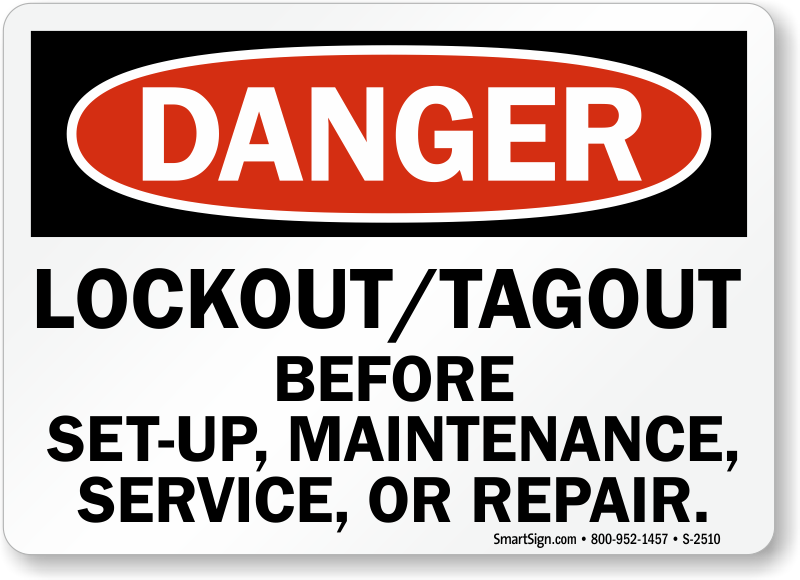
3. Overcrowding information A crowded sign defeats its purpose. Prioritize key details: what’s locked, why, who did it, and when. Use icons or bullet points to improve scannability.
4. Skipping multilingual support If 40% of your maintenance team speaks Spanish, your LOTO signs should too. Printable templates allow dual-language formatting without redesigning entire signage systems.
5. Failing to integrate with LOTO procedures A printable sign is useless if it’s not part of a documented energy control procedure. Always link the tag to a written LOTO plan that defines isolation points, verification steps, and group lockout protocols.
When to Use Printable Signs vs. Pre-Made Tags
Pre-made LOTO tags have their place—especially for high-volume, repetitive tasks. But printable signs shine in specific scenarios:
| Scenario | Best Option | Why |
|---|---|---|
| Routine PM on identical machines | Pre-made tags | Faster application, less setup |
| Custom equipment or one-off repairs | Printable signs | Ability to specify unique hazards |
| Contractor work with variable scope | Printable signs | Include contractor name, company, and contact |
| Temporary lockouts (e.g., diagnostics) | Printable signs | Time-specific fields, no inventory waste |
| Multilingual sites | Printable signs | On-demand translation, no need to stock multiple versions |
The flexibility of printable signs makes them ideal for dynamic environments. You’re not stuck with 500 blank tags when you need one with “Hydraulic Press – Main Valve Isolated – Do Not Energize Until Verified.”
Top 5 Sources for Printable LOTO Sign Templates
You don’t need to design from scratch. These platforms offer professional, OSHA-aligned templates that you can customize and print in-house:
- EHS Insight
- Offers free downloadable LOTO tag templates in PDF and Word formats. Includes bilingual (English/Spanish) options and space for barcodes. Best for mid-sized facilities with digital safety management systems.
- SafetySign.com
- Provides customizable online editor for lockout tags. Print directly or order laminated versions. Their templates follow ANSI Z535 standards for signal words and layout. Great for companies scaling up safety programs.
- Creative Safety Supply
- Features a free library of printable tags, including group lockout, electrical isolation, and valve lockout versions. All templates are editable and include hazard pictograms.
- OSHA.gov (via NIOSH resources)
- While not a template warehouse, OSHA’s website hosts sample LOTO procedures and tag examples that you can adapt. Ideal for teams building compliance from the ground up.
- LockoutTagout.com
- Specialized in LOTO programs. Offers free templates plus paid training kits. Their printable signs include checklists for energy isolation verification—adding a layer of procedural rigor.

Pro Tip: Save your finalized templates in a shared drive labeled “LOTO – Approved Forms.” Train supervisors to pull and print only from this folder to prevent version drift.
Designing an Effective Printable LOTO Sign
A good printable sign isn’t just compliant—it’s intuitive. Use this checklist when creating or vetting templates:
- ✅ Header with “Danger” or “Do Not Operate” in bold, high-contrast font
- ✅ Pictogram of a padlock or hand on a switch (universal recognition)
- ✅ Fields for:
- Equipment name/ID
- Reason for lockout
- Employee name and contact
- Date and time applied
- ✅ Checkbox for energy types isolated (electrical, hydraulic, pneumatic, etc.)
- ✅ Warning statement: “Do not remove this tag unless authorized”
- ✅ Signature line for authorized employee
- ✅ Optional: QR code linking to full LOTO procedure
Avoid using serif fonts like Times New Roman. Stick with sans-serif (Arial, Calibri) for better legibility at a distance or in low light.
Print on 4” x 6” or 5” x 7” cardstock or synthetic material. Never use sticky notes or scrap paper—these undermine the seriousness of the procedure.
Integrating Printable Signs into Your LOTO Program
A single tag doesn’t make a program. Printable signs work best when embedded in a broader energy control system:
- Train employees on how to properly fill out and apply printed tags
- Audit usage monthly—are tags complete, legible, and removed after work?
- Update templates annually to reflect new equipment or language needs
- Store blank printable tags near LOTO stations or in maintenance kits
- Require digital backups of completed tags for incident investigations
One refinery in Texas prints LOTO tags from tablets at the worksite. The technician selects the equipment, inputs their details, and prints a QR-coded tag. Scanning the code later pulls up the full maintenance log—tying safety documentation directly to work orders.
Limitations and When to Upgrade
Printable signs aren’t a one-size-fits-all solution. They have real limitations:
- No durability if printed on standard paper
- Risk of forgery or tampering (unlike serialized industrial tags)
- No audit trail unless paired with digital logging
- Not ideal for outdoor or harsh environments without lamination
For high-risk or high-volume sites, consider upgrading to: - Pre-numbered, tamper-resistant tags with carbon copies - Digital LOTO systems using mobile apps and cloud logging - Smart tags with RFID or Bluetooth tracking
But for most small to mid-sized operations, printable signs—when used correctly—are more than sufficient to meet OSHA expectations and protect workers.
Printable lockout tagout signs are more than a convenience—they’re a tool for consistency, clarity, and compliance. When designed well and used within a documented safety process, they reduce ambiguity and strengthen accountability. Don’t wait for an incident to expose gaps in your energy control program. Audit your current LOTO signage, customize a few key templates, and start printing with purpose.
Take action today: Download a free LOTO tag template, test it in your next maintenance cycle, and train one team on proper use. Small steps create safer operations.
Frequently Asked Questions
What makes a printable LOTO sign OSHA-compliant? It must be durable, legible, include the authorized employee’s name, and warn against operation. Handwritten or printed both qualify if they meet these criteria.
Can I use regular printer paper for LOTO tags? No. Use laminated, synthetic, or cardstock material that resists wear, moisture, and smudging.
Are digital or printed tags better? Printed tags work well for most sites. Digital tags (via apps) offer better tracking but require infrastructure. Choose based on your scale and risk level.
Do printable LOTO signs need to be in color? Not required, but color improves recognition. Use red for danger, yellow for caution, and include clear pictograms.
Can contractors use our printable LOTO templates? Yes—and they should. Provide them with access to your approved templates to ensure consistency and compliance.
How long should we keep used LOTO tags? OSHA recommends retaining lockout documentation for at least one year, especially if involved in an incident or inspection.
Should every machine have its own printable tag? Not necessarily. Use standardized templates but customize fields like equipment ID and isolation points to match the specific machine.
FAQ
What should you look for in Printable Lockout Tagout Signs for Workplace Safety? Focus on relevance, practical value, and how well the solution matches real user intent.
Is Printable Lockout Tagout Signs for Workplace Safety suitable for beginners? That depends on the workflow, but a clear step-by-step approach usually makes it easier to start.
How do you compare options around Printable Lockout Tagout Signs for Workplace Safety? Compare features, trust signals, limitations, pricing, and ease of implementation.
What mistakes should you avoid? Avoid generic choices, weak validation, and decisions based only on marketing claims.
What is the next best step? Shortlist the most relevant options, validate them quickly, and refine from real-world results.